
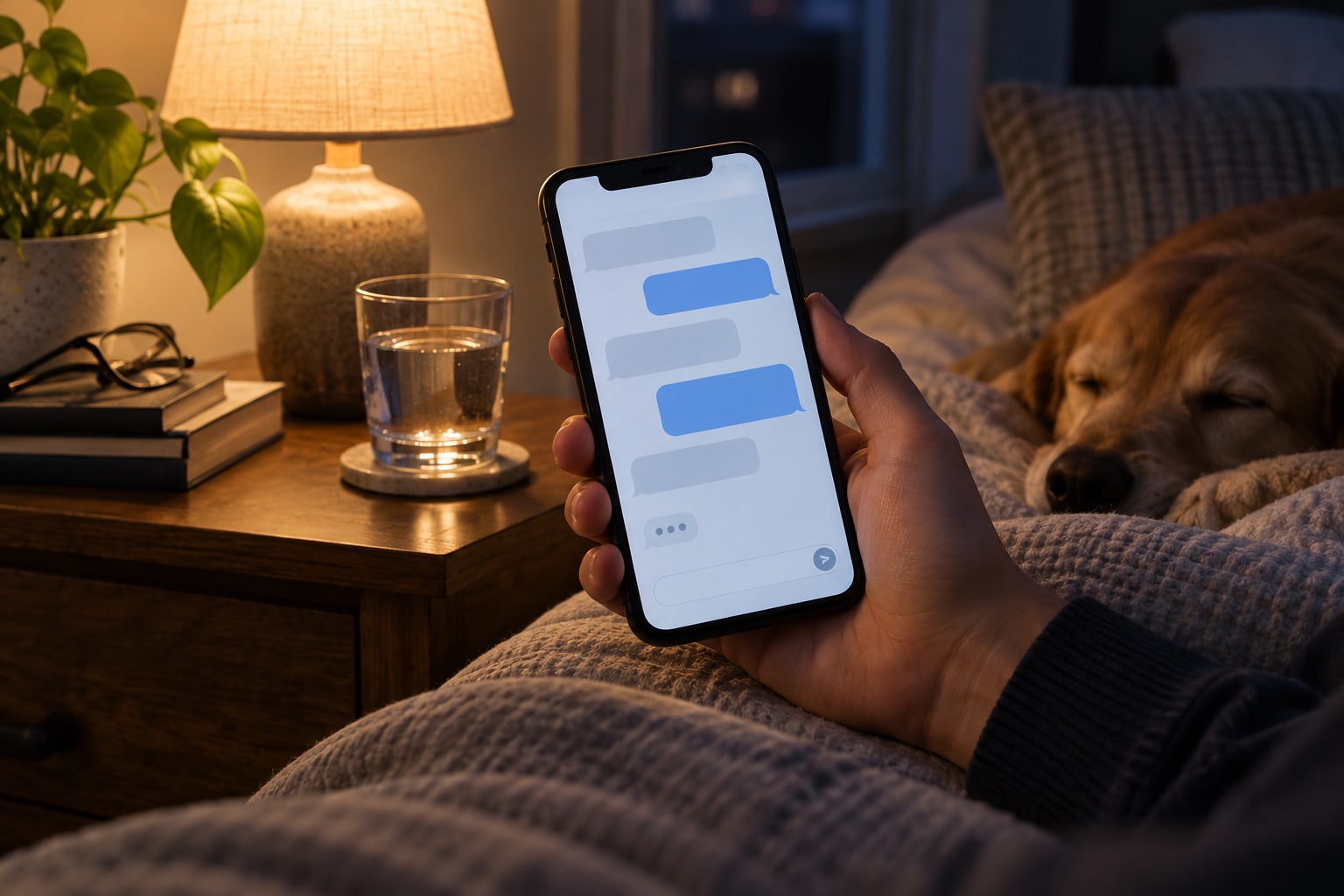
You may have seen a warning online that texting 988 automatically sends police to your location. That claim can scare people away from support at the exact moment they need a calm human connection.
The 988 Suicide and Crisis Lifeline connects people in the United States with trained crisis counselors by call, text or chat. You do not have to be suicidal to reach out. You can contact 988 about emotional distress, substance use concerns or worry about someone you care about.
The conversation is confidential but it is not anonymous. You are not required to provide your name or address. The service may receive your phone number or internet address but it does not have the precise location tools used by 911. Emergency services may be contacted without your consent only in rare situations involving imminent risk of serious harm.
What actually happens when you text 988?
Often part of the picture
- A real person responds after a short automated opening
- The counselor asks what is happening and listens
- You can share as much or as little as feels manageable
- The goal is support, deescalation and a safer next step
Worth a closer look
- Someone is in immediate physical danger
- A suicide attempt is happening or about to happen
- A person cannot take steps to stay safe
- The counselor believes there is an imminent risk of serious harm
Most contacts are resolved through conversation and support without emergency services. According to SAMHSA, about 98 percent of 988 contacts are managed without police involvement.
If a counselor believes there is imminent risk and a less invasive safety plan is not possible, 988 may contact 911 and share available phone or internet information. That is different from automatically tracking every person who reaches out.
What does the text conversation look like?
- You send a message. Text 988 from anywhere in the United States. A short automated message may ask about language and explain that you will be connected with a counselor.
- A trained counselor joins. The counselor will introduce themselves and ask what brought you to 988. This is a real person, not a chatbot.
- You describe what is happening. You can talk about panic, grief, loneliness, substance use, suicidal thoughts or concern for another person. You do not need perfect words.
- You make the moment safer. The counselor may help you slow things down, identify support nearby and create a plan for the next few minutes or hours.
- You choose a next step. That may be continuing the conversation, contacting someone you trust or connecting with local care. Emergency services are reserved for rare situations involving imminent danger.
Which 988 myths should we drop?
- Myth 1: Texting 988 automatically sends police. It does not. Most contacts are handled by crisis counselors without law enforcement. Emergency help is considered when there is imminent risk and a safer option cannot be arranged.
- Myth 2: You must be suicidal to use 988. You can reach out for emotional distress, relationship pain, substance use concerns, panic, loneliness or worry about someone else.
- Myth 3: 988 can see your exact location. 988 does not have the precise location technology that 911 uses. It may receive a phone number or internet address and may share available information with 911 in an imminent emergency.
- Myth 4: You are talking to a robot. After the short opening message, a trained crisis counselor responds and talks with you.
- Myth 5: The counselor can force hospitalization whenever they choose. The purpose is to support and deescalate. Emergency intervention is a last resort for rare situations involving imminent risk.
- Myth 6: You have to give your name and address. You are not required to provide personal details. The conversation is confidential but not anonymous because some technical information may be received.
- Myth 7: 988 is simply 911 for mental health. The services have different roles. 988 begins with trained crisis counseling. 911 dispatches emergency responders for immediate physical danger.
How can I talk with my teen about 988?
- Save the number together. Put 988 in both phones before a crisis. Familiarity removes one small barrier when clear thinking is difficult.
- Explain what the first text may look like. Tell your teen that a brief automated message comes first and then a trained counselor joins. They can begin with a simple sentence such as, “I do not feel safe with my thoughts.”
- Be honest about confidentiality. Say that 988 is confidential but not anonymous. Emergency services may be contacted in rare situations when someone faces imminent serious harm.
- Keep human support in the plan. 988 can help in the moment. A trusted adult, pediatrician, school counselor or qualified mental health professional can help build support that continues afterward.
What is one steady next step?
Save 988 in your phone tonight and invite your teen to do the same. If either of you is in emotional distress, you can call, text or chat with 988 for support.
Keep exploring: Find community support or Find one steady next step.